
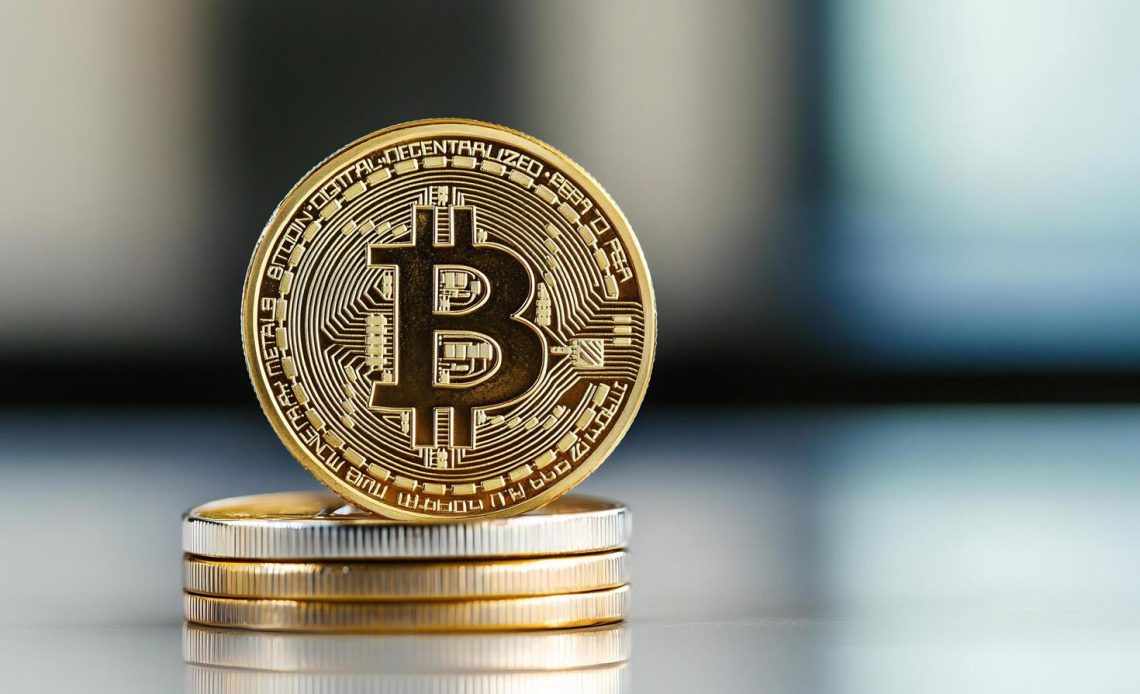
Introduction: A Financial Evolution Unfolding
Bitcoin is no longer a mere curiosity whispered about in tech forums or relegated to speculative bubbles. It has become a centerpiece of a global financial conversation—discussed in boardrooms, legislatures, and even central banks. Created as an alternative to traditional monetary systems, Bitcoin has developed into a symbol of decentralization, a hedge against inflation, and a potential catalyst for a new economic paradigm. To truly grasp its significance, one must explore not only its technological underpinnings but also the cultural, economic, and philosophical shifts it has inspired.
The Origins of Bitcoin: A Bold Response to Crisis
In the wake of the 2008 global financial collapse, confidence in traditional banking institutions was at a historic low. Against this backdrop, an anonymous entity known as Satoshi Nakamoto released a white paper titled “Bitcoin: A Peer-to-Peer Electronic Cash System.” The document proposed a decentralized digital currency—free from central control, capable of transferring value between parties without intermediaries, and secured by cryptographic proof instead of institutional trust
Nakamoto’s vision was a direct critique of the monetary policies that led to widespread financial instability. By limiting Bitcoin’s total supply to 21 million coins, the protocol introduced an inherent scarcity that mimicked the qualities of precious metals like gold. The goal was to create a currency immune to inflationary manipulation and centralized decision-making
The Mechanics of Bitcoin: Trustless Yet Trustworthy
Bitcoin operates on a blockchain, a distributed ledger maintained by a network of computers (called nodes) across the globe. Each transaction is validated through a consensus mechanism known as Proof of Work (PoW). In this system, miners expend computational energy to solve complex mathematical puzzles, securing the network and validating transactions. In return, they receive newly minted Bitcoins and transaction fees
Key elements of Bitcoin’s architecture include:
-
Decentralization: Bitcoin is not issued by a government or corporation, but rather maintained by a voluntary and transparent network
-
Transparency and Immutability: Every transaction is recorded on a public ledger, and once added, it cannot be altered
-
Pseudonymity: Users interact through wallet addresses rather than revealing personal identities, offering a level of privacy
-
Security: With its distributed nature and cryptographic foundation, Bitcoin has proven remarkably resilient to attacks and fraud
Bitcoin’s Value Proposition: More Than Just a Currency
Though originally envisioned as a peer-to-peer payment method, Bitcoin has evolved into a digital asset class with multiple use cases. Its growing reputation as “digital gold” stems from its role as a store of value, particularly in times of economic uncertainty
Why investors and institutions are turning to Bitcoin:
-
Scarcity: With a finite supply, Bitcoin is resistant to inflation—a stark contrast to fiat currencies prone to overprinting
-
Portability and Divisibility: Bitcoin can be sent anywhere in the world within minutes and can be divided into 100 million satoshis, enabling micro-payments
-
Ownership Sovereignty: Individuals maintain direct control over their assets through private keys, bypassing traditional financial custodians
-
Global Accessibility: Bitcoin empowers individuals in countries with unstable currencies or restricted financial access to participate in a borderless economy
Challenges and Criticisms: The Price of Disruption
Despite its advantages, Bitcoin is not without drawbacks. Chief among them is its notorious price volatility. Sudden spikes and drops in value can deter its use as a stable medium of exchange. Moreover, its mining process has drawn criticism for excessive energy consumption, raising environmental concerns
Additional criticisms include:
-
Regulatory Ambiguity: Governments around the world remain divided on how to classify and regulate Bitcoin, which creates legal uncertainty
-
Scalability Issues: Bitcoin’s transaction capacity is limited, leading to congestion and higher fees during peak times
-
Use in Illicit Activities: Though blockchain’s transparency aids forensic tracing, Bitcoin’s early use in dark web markets has marred its reputation
The Institutional Embrace: From Fringe to Financial Mainstream
Over the past few years, Bitcoin has experienced a marked shift in perception. Once dismissed by financial elites, it is now being integrated into the portfolios of major institutions and hedge funds. Companies like MicroStrategy, Tesla, and Square have invested billions into Bitcoin, citing it as a reserve asset superior to cash
Meanwhile, the rise of Bitcoin Exchange-Traded Funds (ETFs) and crypto custody services has opened doors for traditional investors seeking exposure without navigating private wallets or keys. Central banks, while hesitant to endorse Bitcoin directly, are responding by exploring their own Central Bank Digital Currencies (CBDCs), borrowing principles from Bitcoin’s architecture
Bitcoin as Legal Tender: A Political and Economic Experiment
In 2021, El Salvador became the first country to adopt Bitcoin as legal tender—a bold move that sparked both praise and criticism. Supporters hailed it as an innovative leap toward financial inclusion, while skeptics questioned its volatility and the readiness of national infrastructure to support digital transactions
This development signals that Bitcoin is not merely an investment vehicle, but a tool for sovereign monetary policy experimentation. If successful, it could pave the way for other nations, particularly those with unstable currencies, to explore similar adoption
The Road Ahead: What the Future Holds for Bitcoin
As the world grows increasingly digitized, Bitcoin’s relevance is likely to expand. The advent of second-layer solutions like the Lightning Network promises to address scalability, enabling faster and cheaper transactions. In parallel, regulatory clarity could provide a safer framework for adoption, encouraging broader institutional and public participation
Trends likely to shape Bitcoin’s future:
-
Increased Adoption in Developing Economies: As mobile access and digital literacy improve, Bitcoin could offer financial services to the unbanked
-
Sustainable Mining Innovations: The push toward green energy in mining operations may alleviate environmental concerns and enhance public perception
-
Greater Financial Integration: Bitcoin may become a standard asset class, featured alongside stocks, bonds, and commodities in diversified portfolios
-
Enhanced User Experience: Continued innovation in wallets, exchanges, and financial tools will make Bitcoin more accessible to the average person
Conclusion: Bitcoin’s Quiet Revolution
Bitcoin is not merely a technological marvel—it is a philosophical statement about the nature of value, trust, and freedom. It questions long-held assumptions about who should control money and how financial systems should operate. Whether it becomes a universally adopted currency or remains a niche store of value, its influence is undeniable
In a world fraught with economic instability, political uncertainty, and institutional mistrust, Bitcoin offers an alternative—one rooted in transparency, scarcity, and user empowerment. As it continues to challenge traditional norms, Bitcoin invites us to reimagine finance not as a privilege of the few, but as a right for all.